MASTERPIECE COLLECTION · 14 MODELS
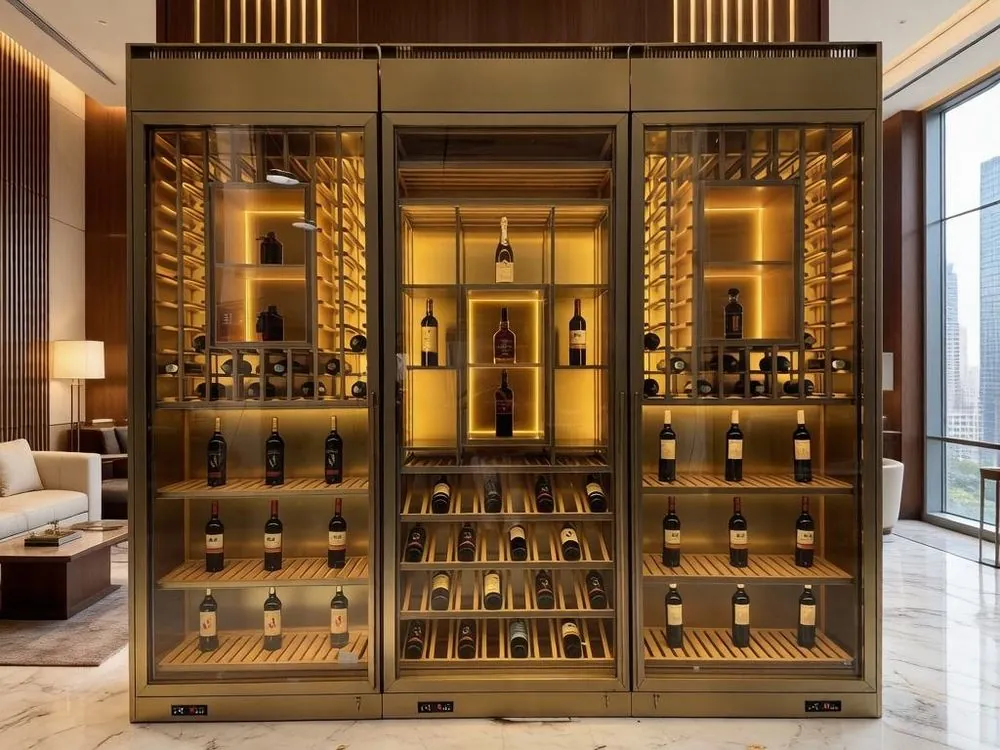
Custom Wine Cabinets in SUS304 Stainless Steel
Engineered and built in our 6,600 m² Foshan atelier. Send a room schedule or a sketch — we return a marked-up 3D concept and a costed bill of materials.
TÜV Rheinland Audited · 8 Items
100% Finished-Goods Inspection
MOQ 1 Unit · No Batch Threshold
FOB · CIF · CFR · EXW
D/P · T/T · L/C Accepted
01 — THE COLLECTION
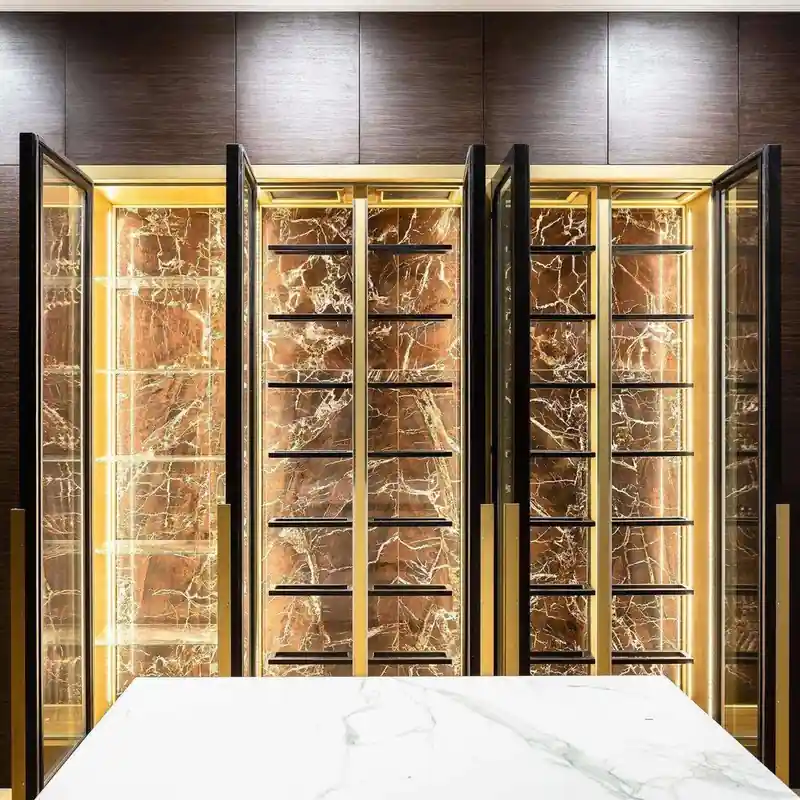
A custom wine cabinet has to satisfy two audiences at once. The client sees a wine display that belongs in the room; the bottle sees a wine storage environment that holds within a degree. Most cabinets on the market are built for one and compromise the other. We build wine cabinet collections in Foshan that are specified like equipment and finished like joinery, in sizes from a built-in wine cabinet for a city kitchen to a large capacity cabinet holding more than a thousand bottles.
The six cabinet types we build
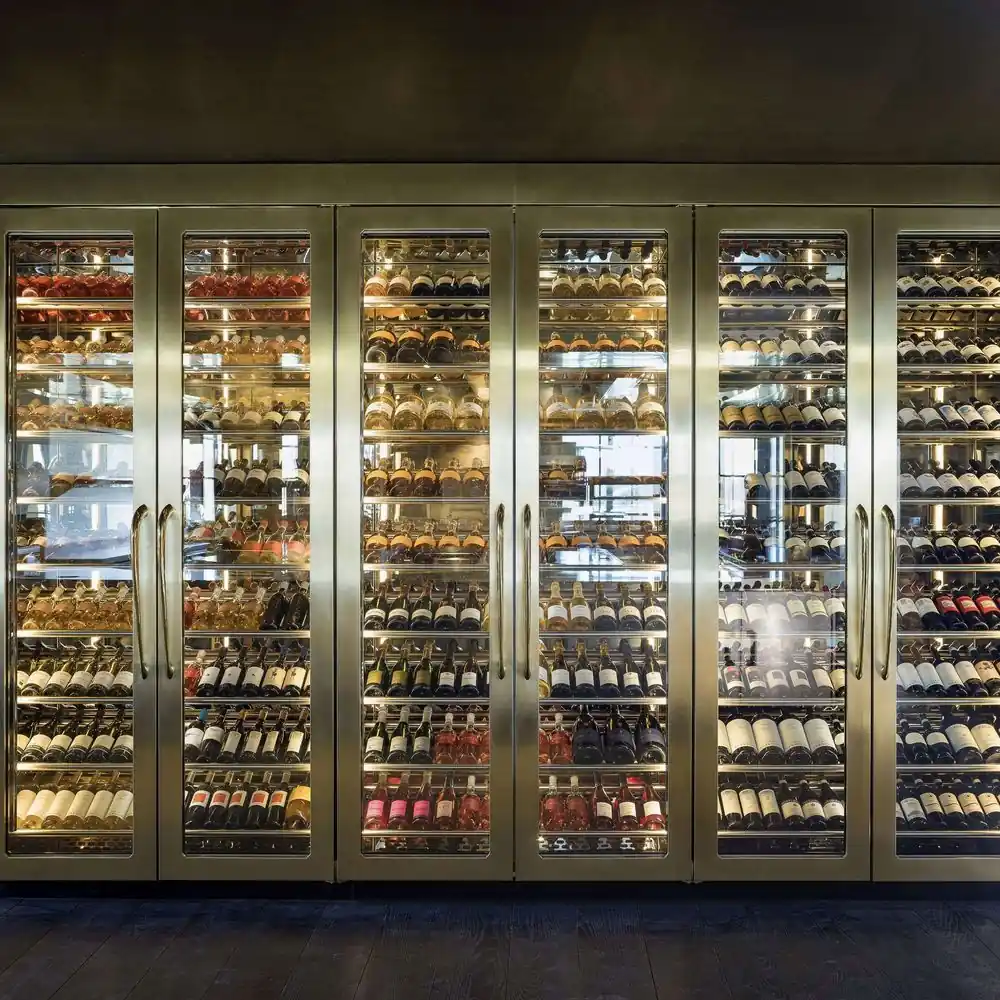
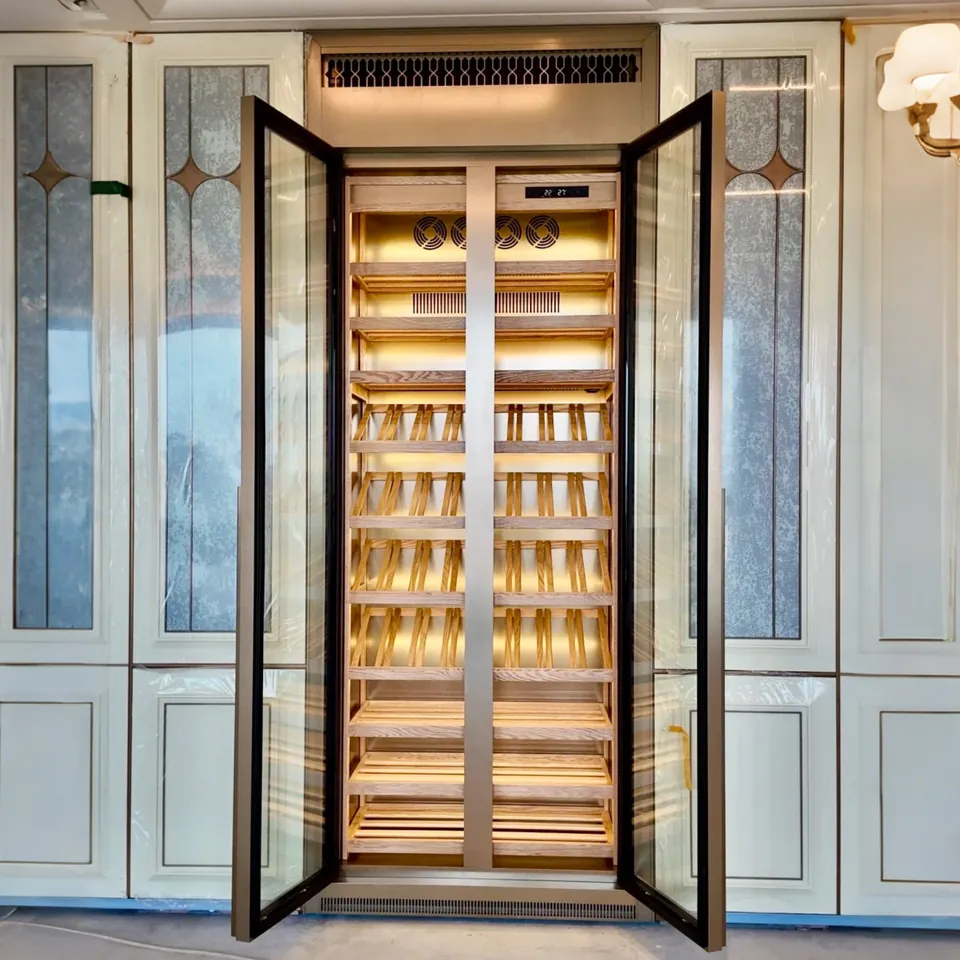
H3: Stainless steel wine cabinet — formed SUS 304 frame, glass door, interiors configured around the bottle count. This is the metal wine cabinet specification we recommend for commercial rooms, coastal sites and anywhere a cleaning schedule exists.
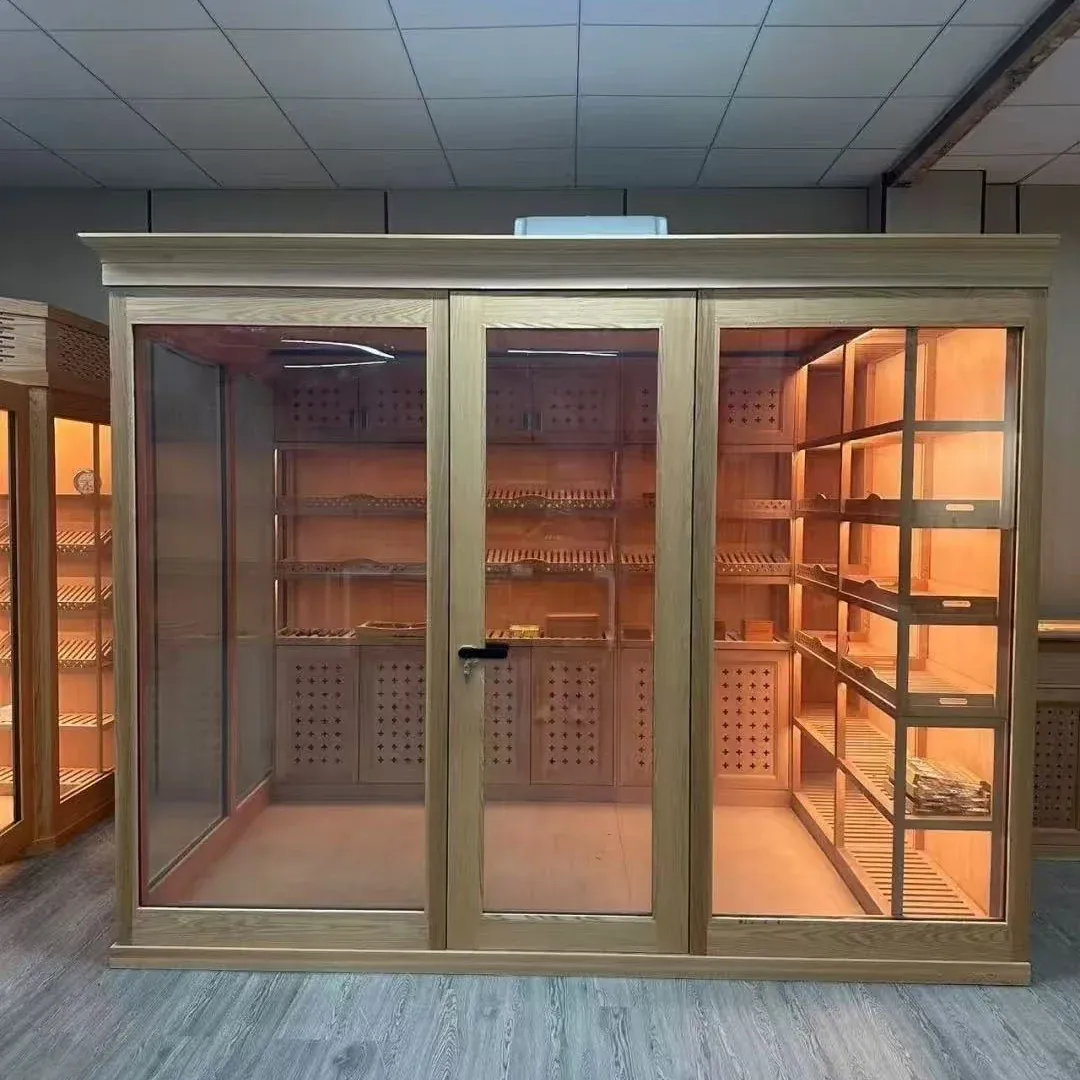
H3: Solid wood wine cabinet — the warmer option for a dining room or study. A solid wood wine cabinet needs stable humidity precisely because timber moves; we detail the interior accordingly rather than pretending the material is inert.
H3: Stainless steel and acrylic wine cabinet — acrylic internals with a stainless structure, used where the client wants the bottles to appear to float. Light transmission, scratch resistance and cleaning are all consequences of that choice.
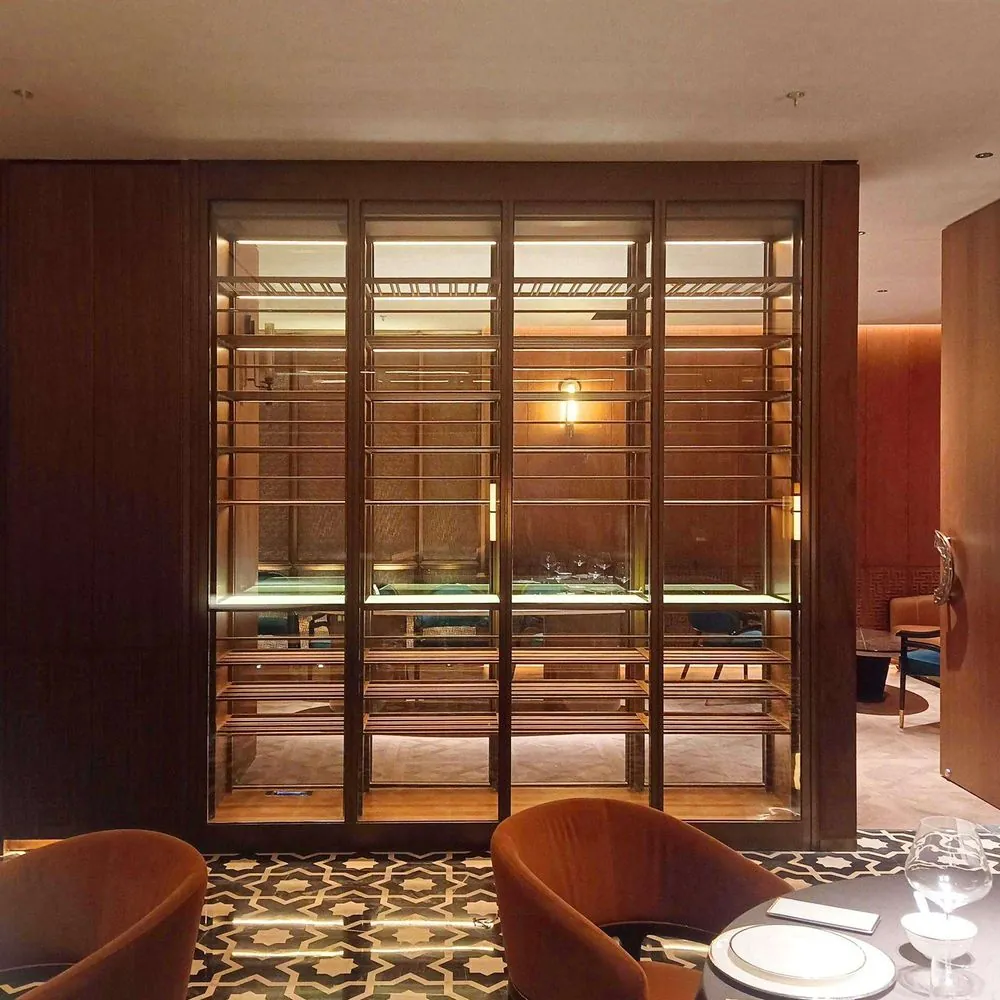
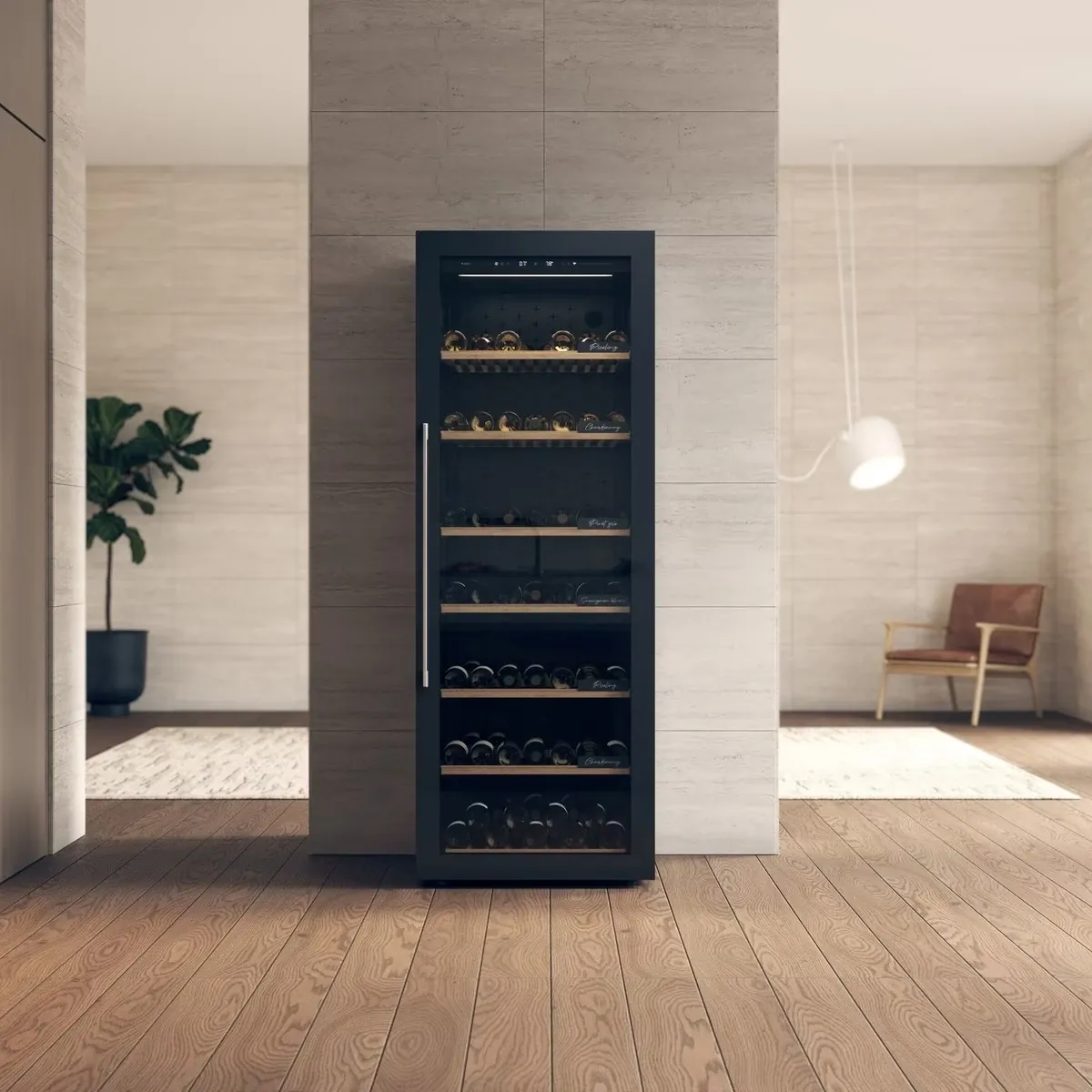
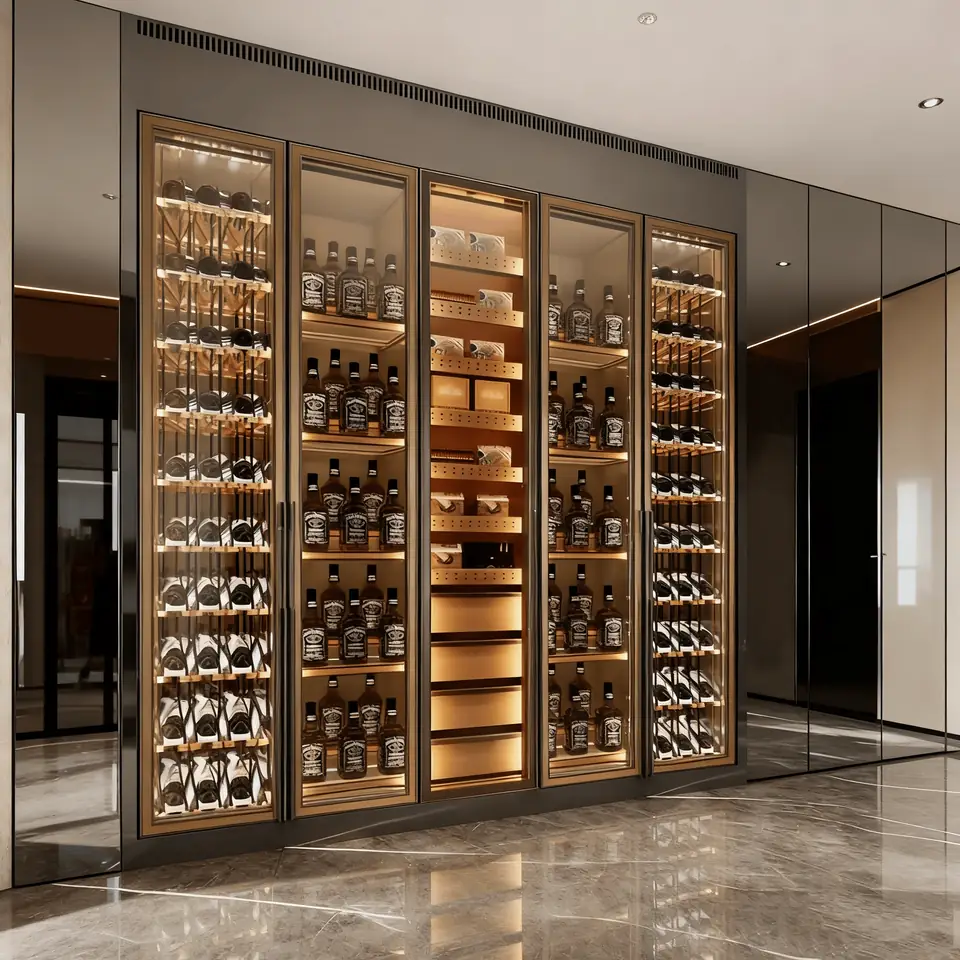
H3: Built-in wine cabinet — designed to the cabinet run, not to a nominal width. A built-in wine cabinet is only as good as the survey behind it; we ask for the finished opening, the service access and the door swing before we draw.
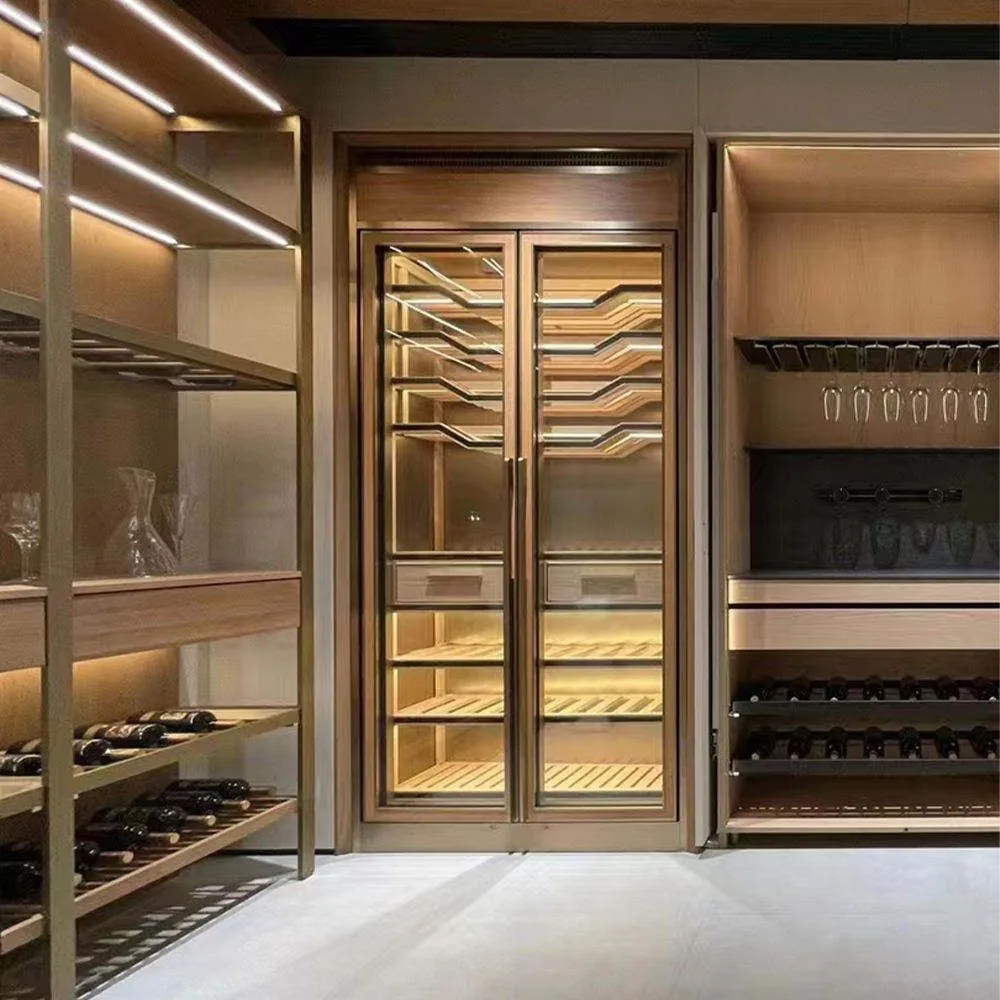
H3: Double-door wine cabinet — for capacity and for symmetry. A double-door wine cabinet carries a centre mullion that has to be structural, not decorative, or the doors will disagree with each other after a year.
H3: Decorative wine cabinet — where the cabinet is part of the architecture: a decorative wine cabinet with illuminated shelving, a wine display rack integrated into a partition, or a liquor display unit that mixes bottles with glassware.
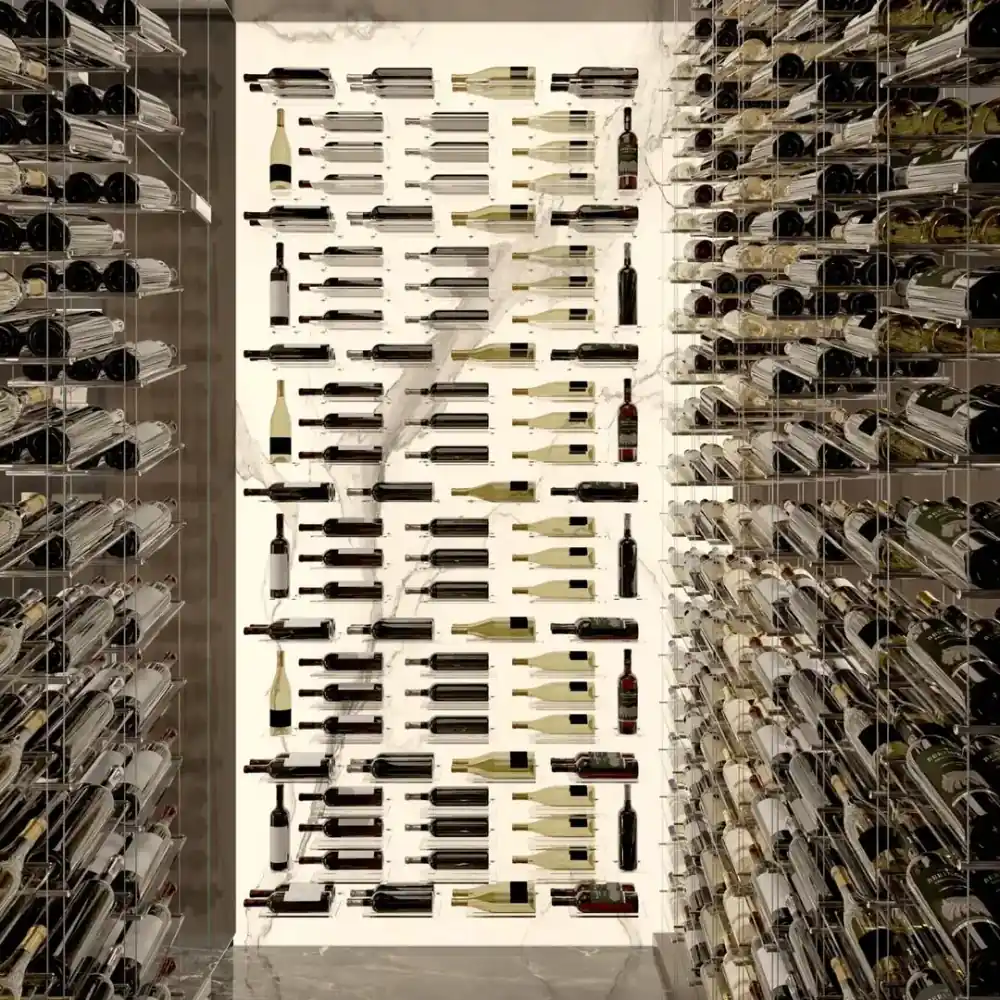
Where the brief calls for open shelving rather than a closed box, a wine storage cabinet in the same frame carries the collection without a door — the same insulation and cooling, a different front.
Single zone, dual zone, or constant temperature
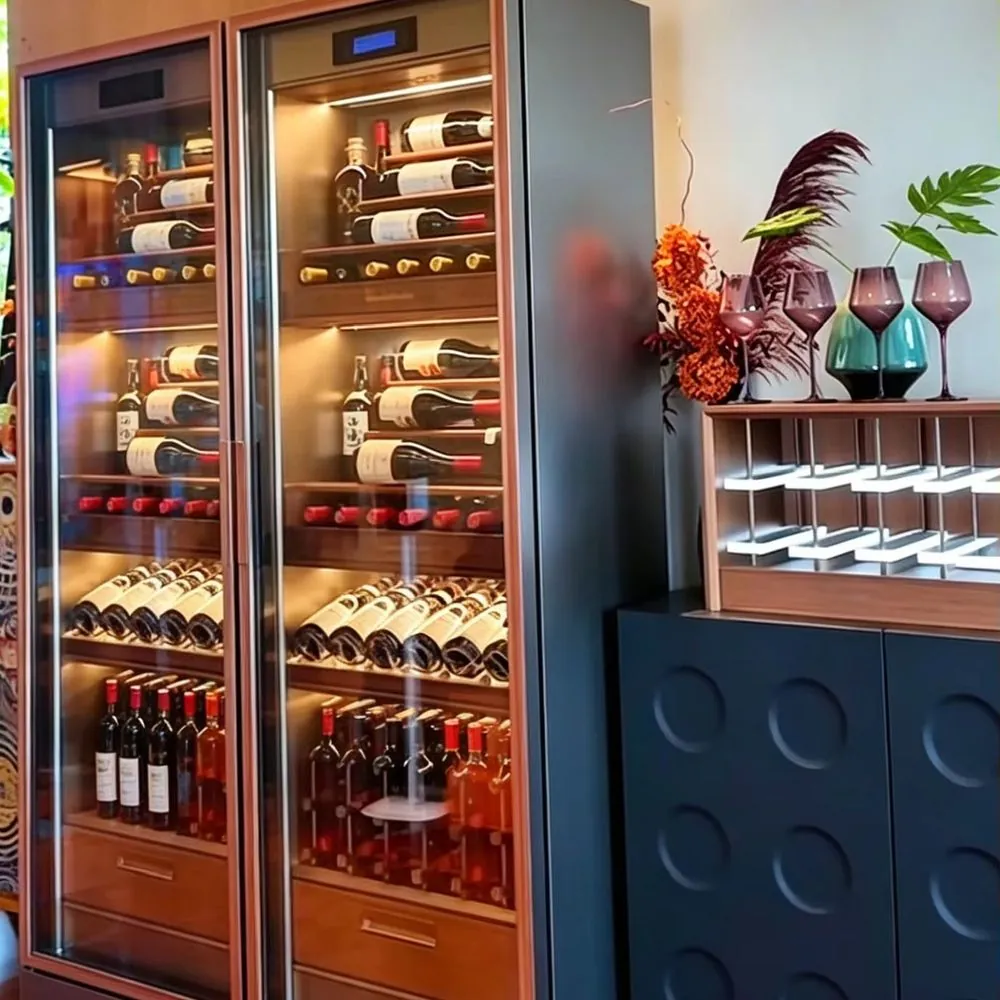
A constant temperature wine cabinet holds one setpoint — the correct answer for long-term storage and the simplest machine to keep stable. A dual-zone wine cabinet splits the interior so that service temperature and storage temperature coexist; useful in a red wine cabinet used nightly, and only worth the extra complexity if the two zones are genuinely used differently. A constant temperature red wine cabinet in a dining room usually wants 12–16 °C on the serving side rather than a wide split.
The compressor wine cabinet is the workhorse: fast pull-down, wide ambient tolerance, and serviceable anywhere. Absorption units suit very small cabinets and silent bedrooms, but they are slower and less tolerant of high ambient temperature. We will tell you which one your room actually needs.
Temperature-controlled, or merely refrigerated
A temperature-controlled wine cabinet and a wine refrigerator are not synonyms. A wine cooler that swings four degrees is a drinks fridge with a glass door; a controlled wine cabinet holds its setpoint through the ambient peak and recovers quickly after the door closes. The difference is in the evaporator, the insulation and the door — not in the badge on the front.
That is also why a wine cooler cabinet specification should state ambient tolerance, pull-down time and recovery time. If a supplier cannot quote those three numbers, the product is a wine cabinet refrigerator in the ordinary sense rather than a preservation appliance.
Configuring the interior
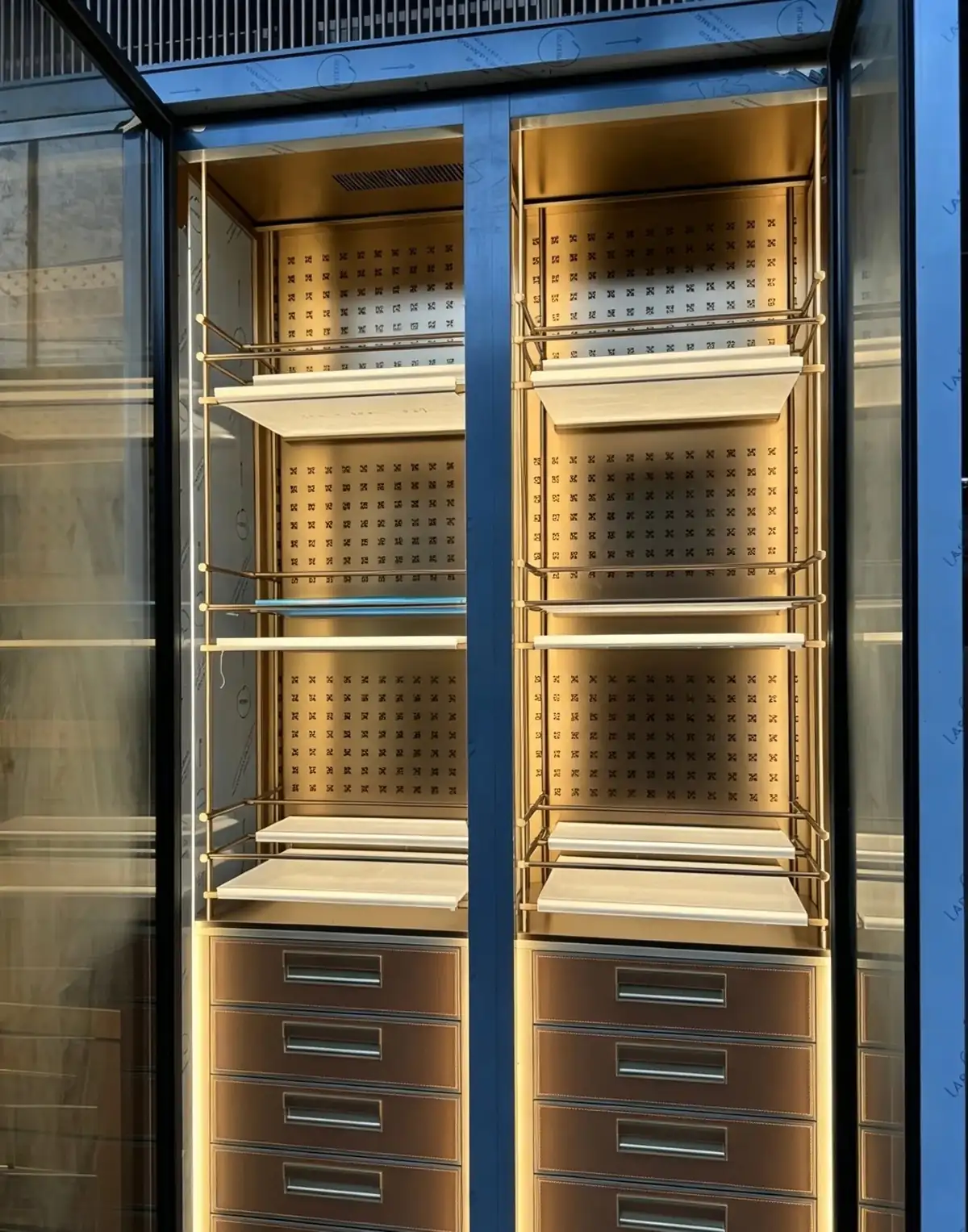
Bottle geometry decides the rack. Bordeaux, Burgundy, champagne and magnums do not share a cradle, and a wine bottle display that looks correct with one shape will not hold another. We ask for the collection mix, then detail shelves, cradles, drawers and glass storage around it. A wine display rack at eye level, drawers below for cases, and a service void at the back is a more useful arrangement than an even grid.
High-end wine storage, specified honestly
High-end wine storage is a phrase used loosely. In our drawings it means: a named stainless grade, an insulated glass door, a serviceable refrigeration circuit, and an inspection record per unit. It does not mean a thicker door or a louder badge.
Wine cabinet design and delivery
Wine cabinet design begins with capacity and the room's ambient range, then moves to the door, the finish and the interior. We return a 3D direction and a fabrication assessment within 48 hours, produce in approximately one month after drawing approval, and supply a custom stainless steel wine cabinet or a timber equivalent on the same schedule. Every unit is inspected before crating — not a sample, every unit.
Frequently asked questions
Can a wine cabinet sit in a kitchen?
Yes, if the ambient range is stated. A cabinet rated for a 30 °C room will behave differently at 35 °C; we ask for the summer peak rather than the average.
Do I need dual zone?
Only if you genuinely serve at one temperature and store at another. Two zones sharing one small compressor often hold less stable than one well-designed single zone.
Is a glass door a problem?
Glass is the largest heat gain and the reason a cabinet needs a compressor rather than a Peltier plate. Insulated, low-emissivity glass with a thermal-break frame is the specification; ordinary tempered glass is not.
How many bottles will it really hold?
The honest number is the mixed-load figure, not the maximum. We quote capacity for the collection you actually own, and we will show the loading diagram.
What is the lead time?
Approximately one month after drawing approval, in both peak and off season. Transport is additional and quoted by Incoterm.
Can you match a cabinet to existing joinery?
Yes — finish, reveal and plinth can be matched from a sample. We ask for a physical sample rather than a screen colour, because 3000 K light does not render on a monitor.
Related collections and models
02 — MODELS
Custom Wine Cabinets: 14 Engineered Models
Every model below is built to order. Dimensions, finish and refrigeration capacity are specified per project — nothing here is a stock item.
START A CONVERSATION
Specify a Custom Wine Cabinets Project
Send drawings, a room schedule or a reference photograph. A named engineer reviews it and replies with a 3D concept and a costed BOM — usually within 48 hours.