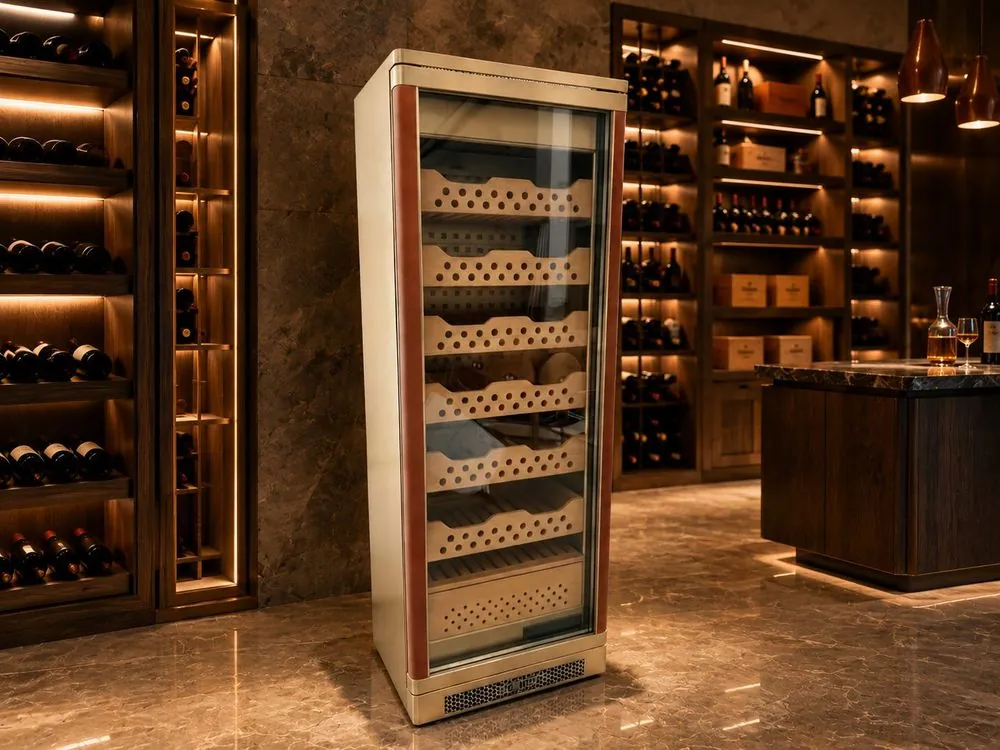
MASTERPIECE COLLECTION · 9 MODELS
Custom Spanish Cedar Cigar Humidors
Engineered and built in our 6,600 m² Foshan atelier. Send a room schedule or a sketch — we return a marked-up 3D concept and a costed bill of materials.
TÜV Rheinland Audited · 8 Items
100% Finished-Goods Inspection
MOQ 1 Unit · No Batch Threshold
FOB · CIF · CFR · EXW
D/P · T/T · L/C Accepted
01 — THE COLLECTION
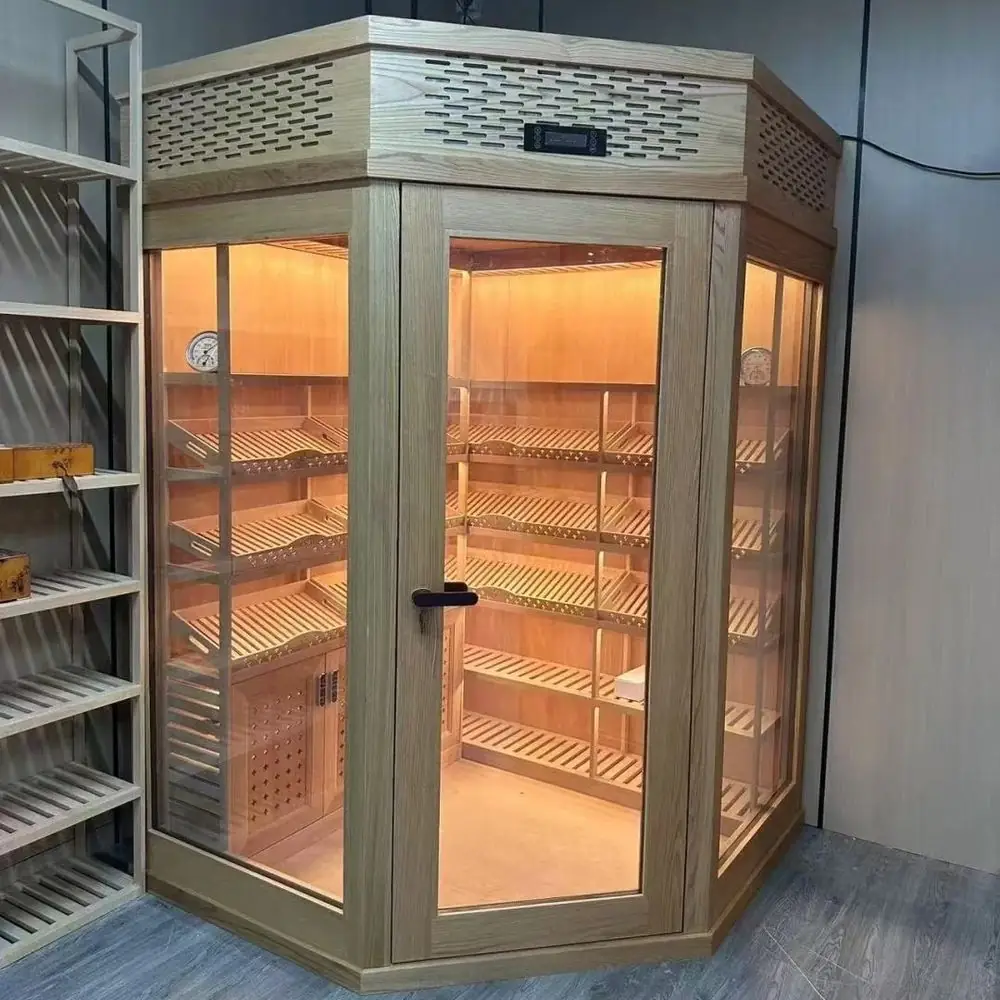
A custom cigar cabinet is judged by what happens after the door has been open for two minutes. Anyone can display 70% relative humidity on a screen; the question is how quickly the interior returns to it, and whether the wrapper leaves stay pliable through a dry winter. We build cigar cabinet collections in Foshan around that recovery behaviour — a cigar preservation cabinet first, a piece of furniture second.
What the cabinet is actually controlling
Three variables, in order of importance: relative humidity stability, temperature stability, and air movement gentle enough not to dry the foot of a cigar. A constant temperature cigar cabinet that holds temperature but lets humidity drift is a display case. A cigar cooler humidor that holds both is a preservation appliance.
Most collectors specify a target near 70% relative humidity and a temperature in the high teens to low twenties Celsius. The number matters less than the tolerance: a stable 68% is safer than a system that averages 70% while swinging between 62% and 78%.
Spanish cedar, and where it belongs
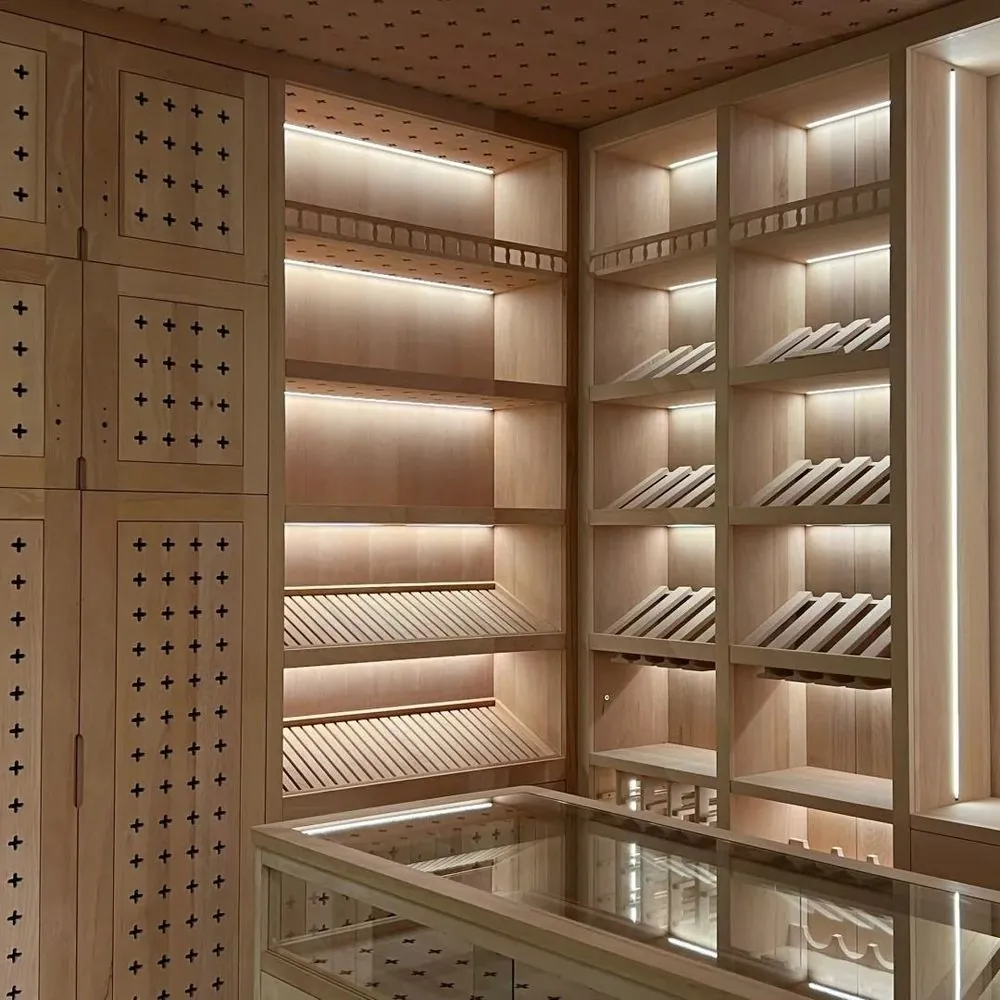
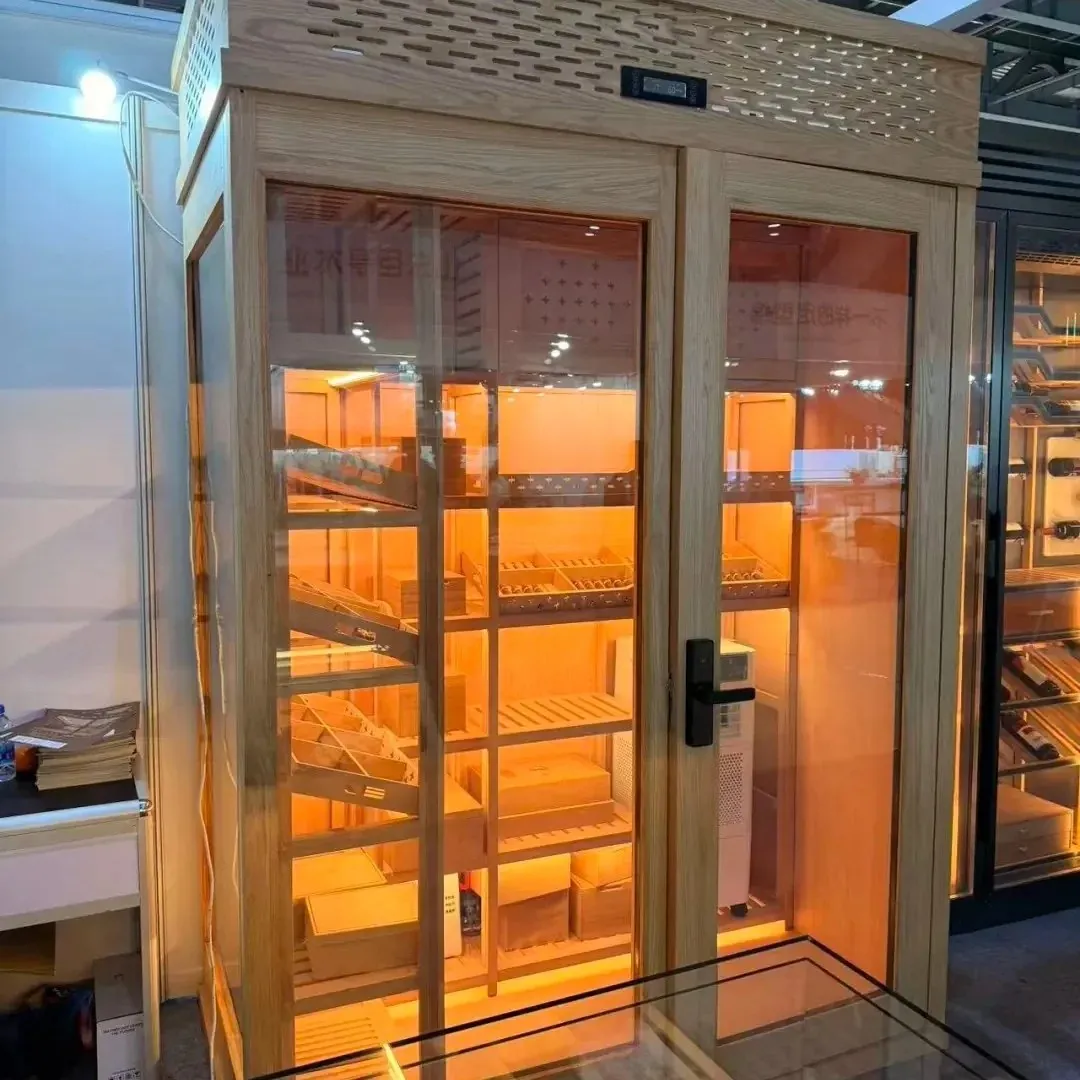
A cedar wood cigar cabinet uses Spanish cedar for its aroma and its buffering behaviour — the timber absorbs and releases moisture, which softens short-term swings. Cedar is not a substitute for humidity control, and a cedar-lined box with no control is a humidor in the traditional sense, not a cigar preservation cabinet.
Where the cabinet is also a display piece, we use cedar for the interior and a stainless or lacquered exterior. The stainless steel cigar cabinet exterior is the right choice for a club or retail floor where cleaning chemicals are routine; the cedar stays inside where it belongs.
Metal, timber, or a hybrid
A metal cigar cabinet holds its geometry and is easy to clean, which is why commercial lounges choose it. A custom cigar cabinet in a private residence often mixes a metal chassis with timber internals — the structural stability of steel, the humidity buffer of cedar.
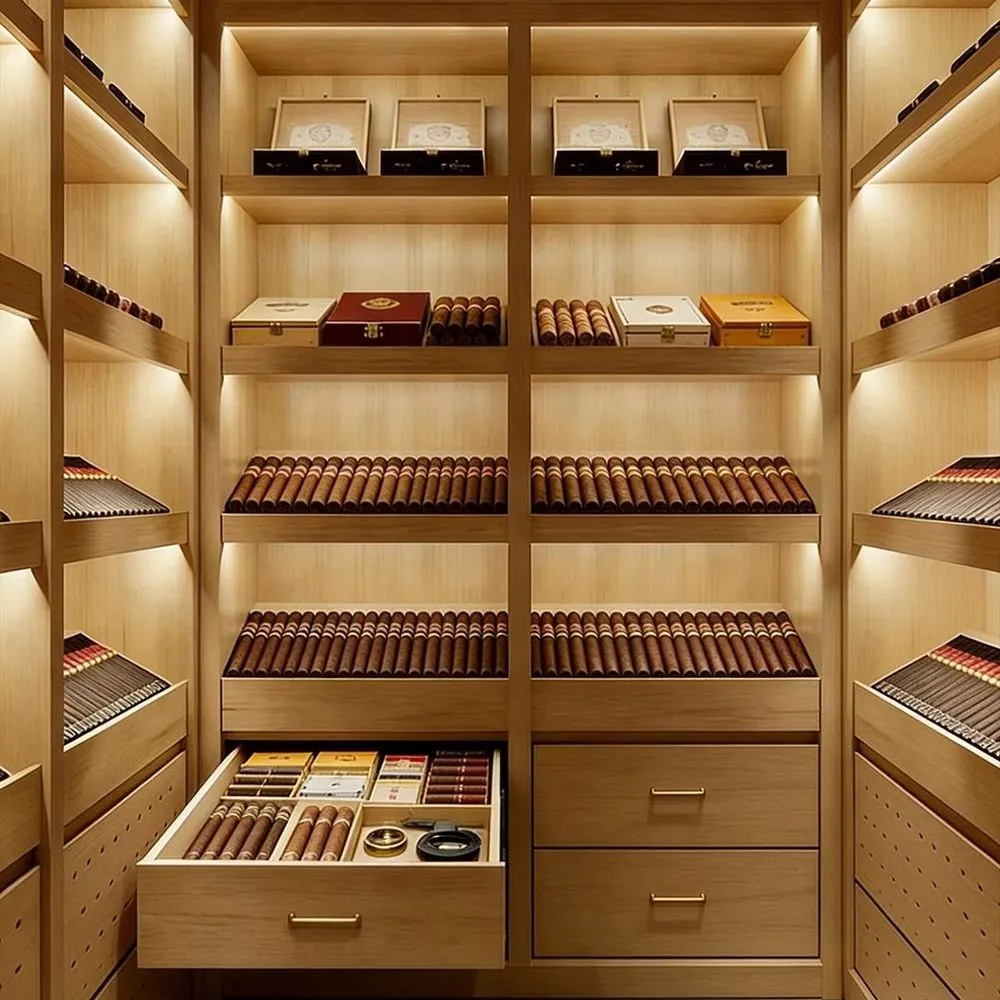
The cigar cellar case is different again: a Cigar Cellar is a room rather than a cabinet, with an envelope, a door and a service route. If the space exists, a room will always outperform a box; if it does not, a cabinet is the honest recommendation.
Electric humidification, done properly
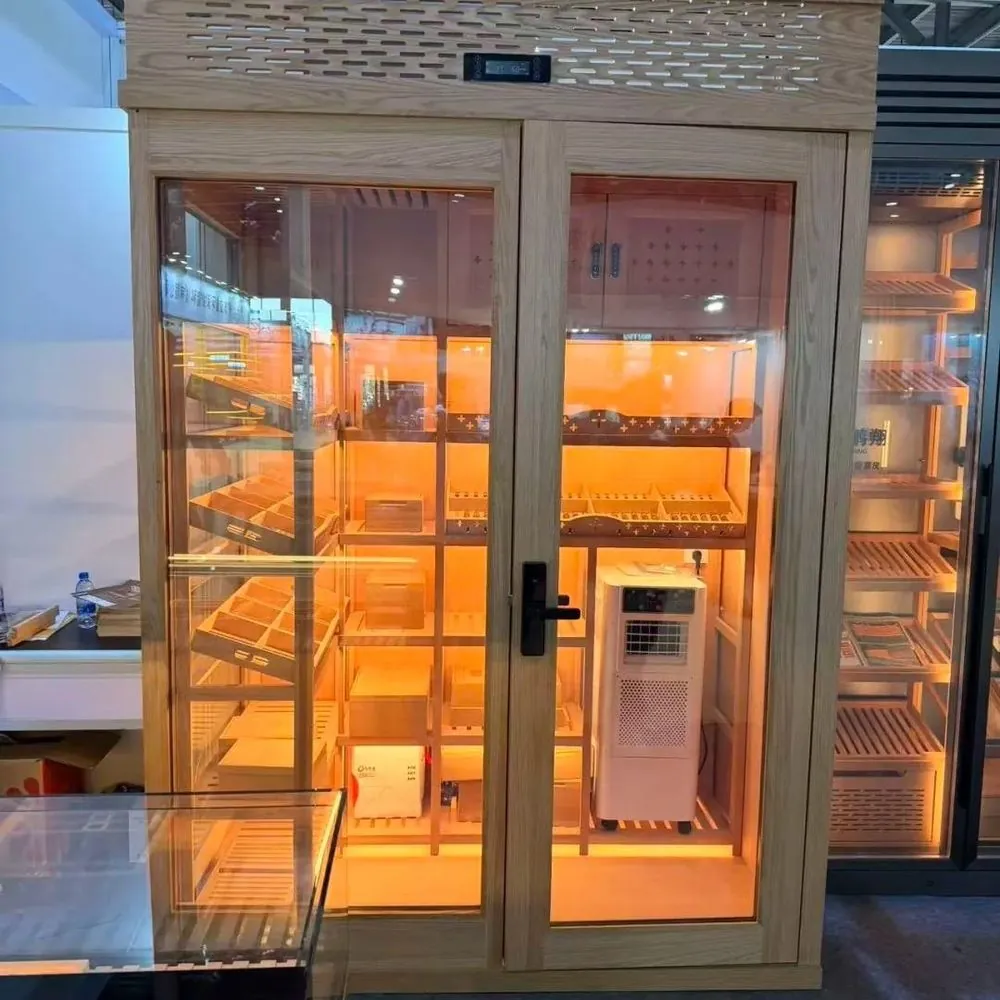
An electric humidor cigar cabinet introduces moisture actively, usually as cold mist, and controls it against a sensor. Two engineering details decide whether it works: where the sensor sits (it must see the room, not the mist outlet), and how the cabinet behaves when the door is opened in winter. We detail both in the drawing package rather than leaving them to commissioning.
Placement changes the specification
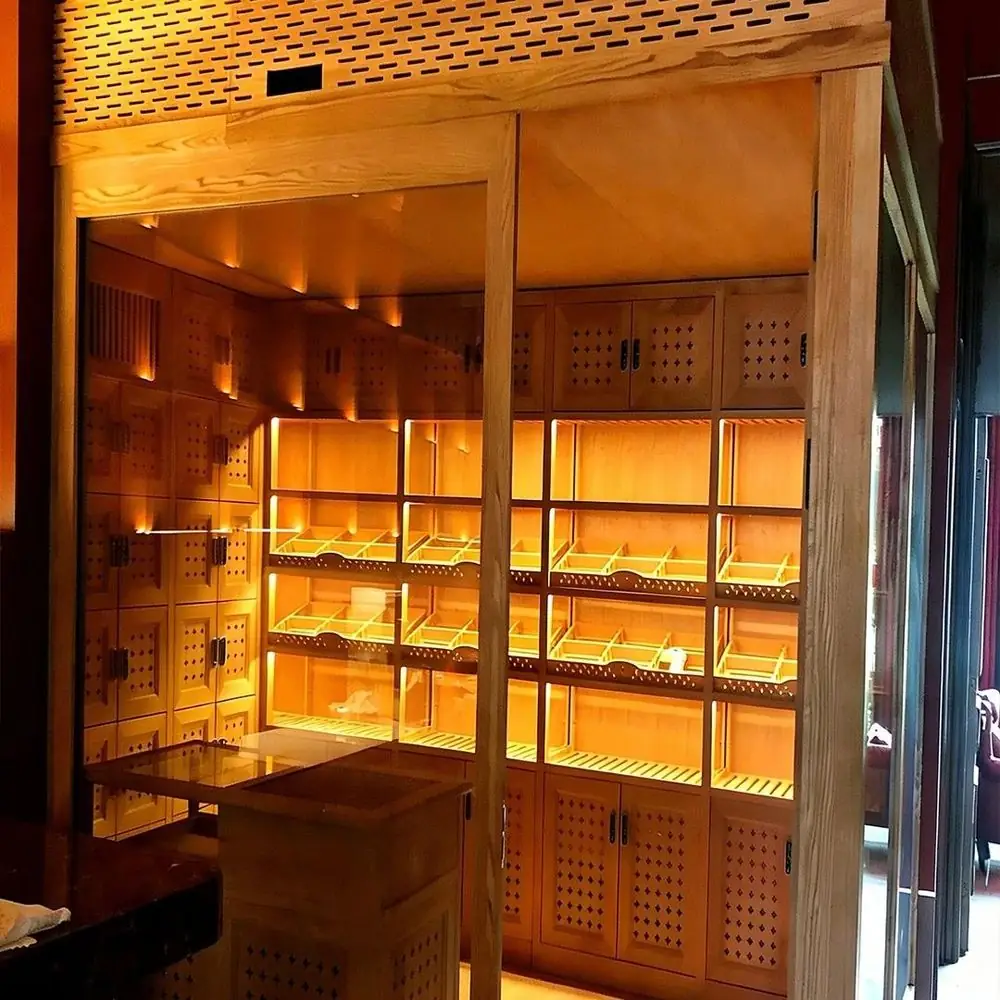
A cabinet in a retail lounge is opened fifty times a day; a cabinet in a private study is opened twice a week. The same chassis cannot serve both well. For frequent opening we specify a larger evaporator and a tighter recovery target, and we accept a slightly higher noise floor. For a residence we trade recovery speed for silence. Where the cabinet faces a window, solar gain enters the calculation exactly as it does for a wine cellar, and the answer is the same: insulated glass, not a thicker door.
Service access is the second consequence of placement. A cabinet against a wall needs its condenser air path; a cabinet built into joinery needs a removable panel. We ask for the placement before the drawing, not after.
Sizing and interior configuration
Capacity is quoted in cigars, and the honest number assumes a mixed ring gauge rather than a single perfect format. Drawers, trays and box storage are configured around what the client actually keeps — boxes, singles, or both. A cabinet that holds 2,000 cigars in theory and 900 in practice is a marketing number.
Frequently asked questions
Do I need a cigar cellar or a cigar cabinet?
If you have a room of four square metres or more and can insulate it, a cellar gives better stability. Below that, a cabinet will outperform a small room built badly.
Is Spanish cedar necessary?
It is desirable, not magic. Cedar buffers humidity and contributes aroma; it does not replace a controlled moisture source.
How stable can humidity be held?
Stability depends on door-opening frequency, ambient conditions and the control strategy. We specify the recovery behaviour in the drawing package and verify it at commissioning; we do not quote a tolerance we have not designed for.
What electrical supply is required?
110 V / 60 Hz for North America, 220 V / 50 Hz for Europe and most other markets, confirmed at engineering review.
Can the cabinet be built into joinery?
Yes, provided ventilation and service access are designed in. A cabinet sealed into a cupboard with no air path will not hold its setpoint.
What is the warranty?
36 months on the climate system and structure, honoured through the engineer who built the file.
Related collections and models
02 — MODELS
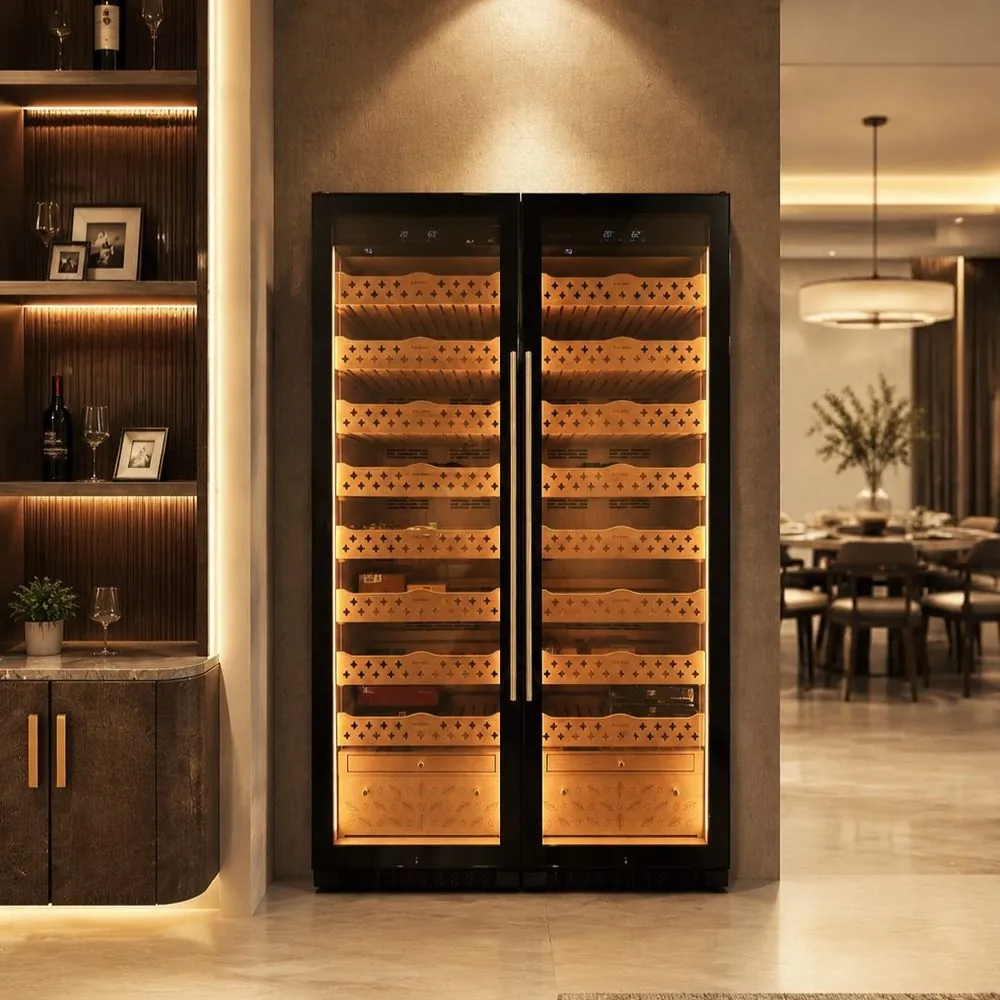
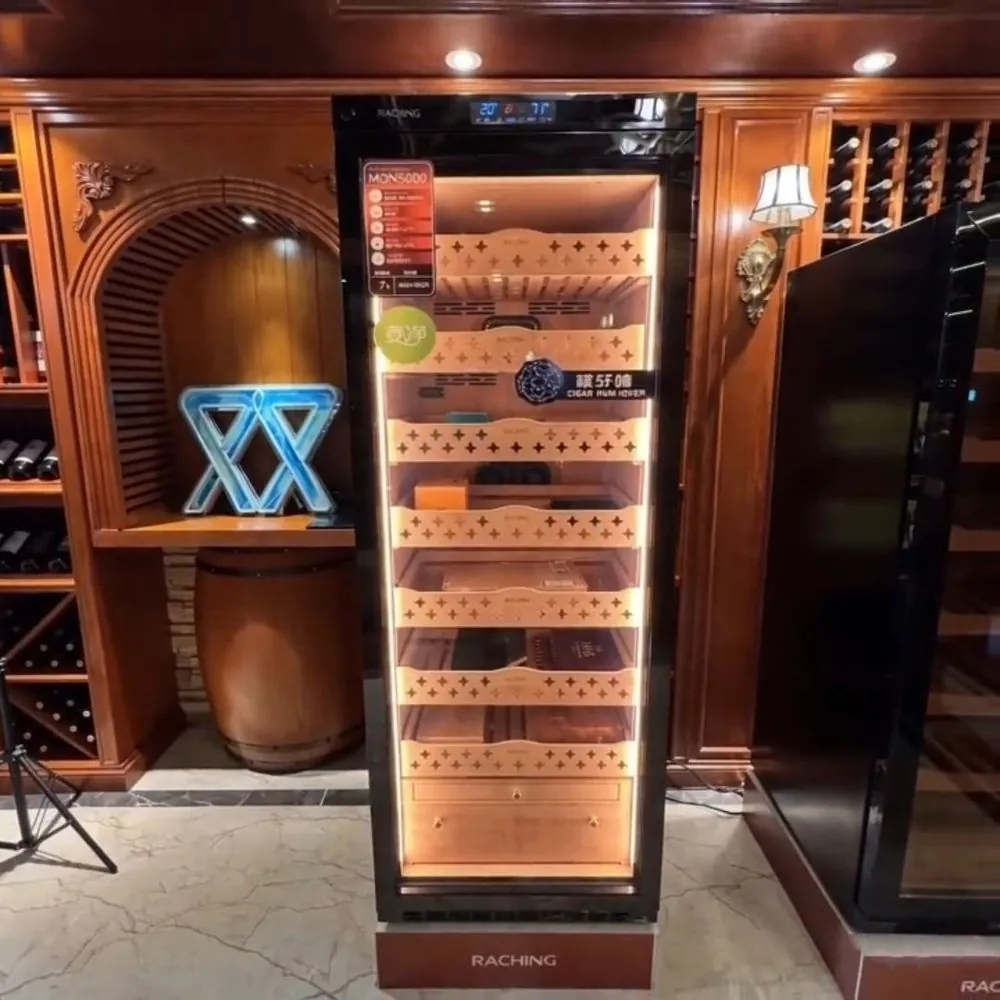
Custom Cigar Cabinets: 9 Engineered Models
Every model below is built to order. Dimensions, finish and refrigeration capacity are specified per project — nothing here is a stock item.
START A CONVERSATION
Specify a Custom Cigar Cabinets Project
Send drawings, a room schedule or a reference photograph. A named engineer reviews it and replies with a 3D concept and a costed BOM — usually within 48 hours.