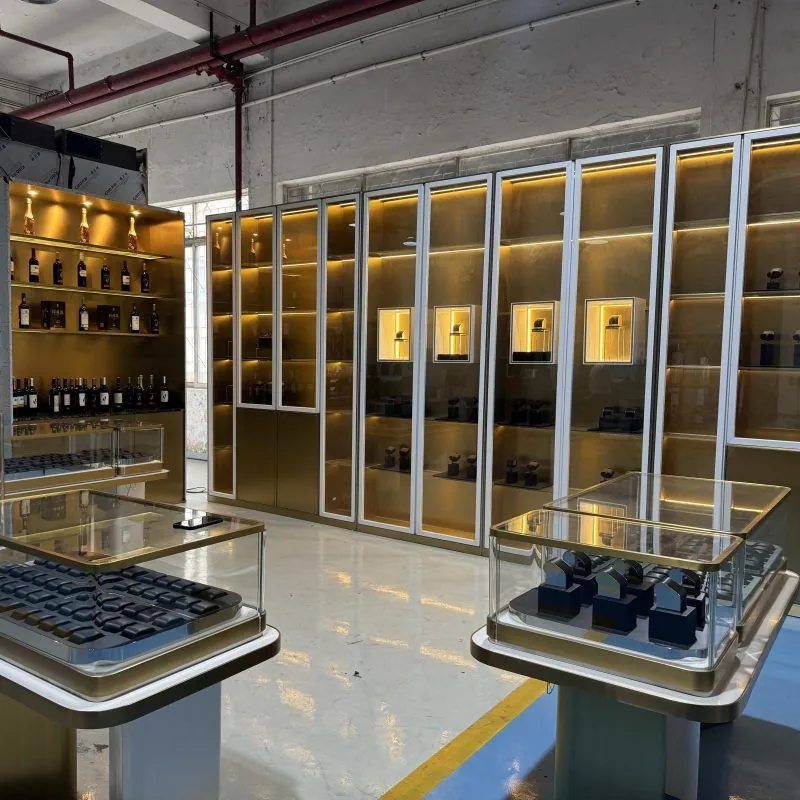
MASTERPIECE COLLECTION · 8 MODELS
Custom Display Cabinets for Wine and Spirits
Engineered and built in our 6,600 m² Foshan atelier. Send a room schedule or a sketch — we return a marked-up 3D concept and a costed bill of materials.
TÜV Rheinland Audited · 8 Items
100% Finished-Goods Inspection
MOQ 1 Unit · No Batch Threshold
FOB · CIF · CFR · EXW
D/P · T/T · L/C Accepted
01 — THE COLLECTION
A custom display cabinet is a lighting and dust problem before it is a furniture problem. A display cabinet holding collectibles, instruments or jewellery fails in three ways: the light heats the object, the seals let dust in, or the glass reflects the thing you are trying to see. We build custom display cabinet systems in Foshan — stainless, solid wood, acrylic and glass — specified around what is being shown rather than around a catalogue photograph.
Cabinet types by contents
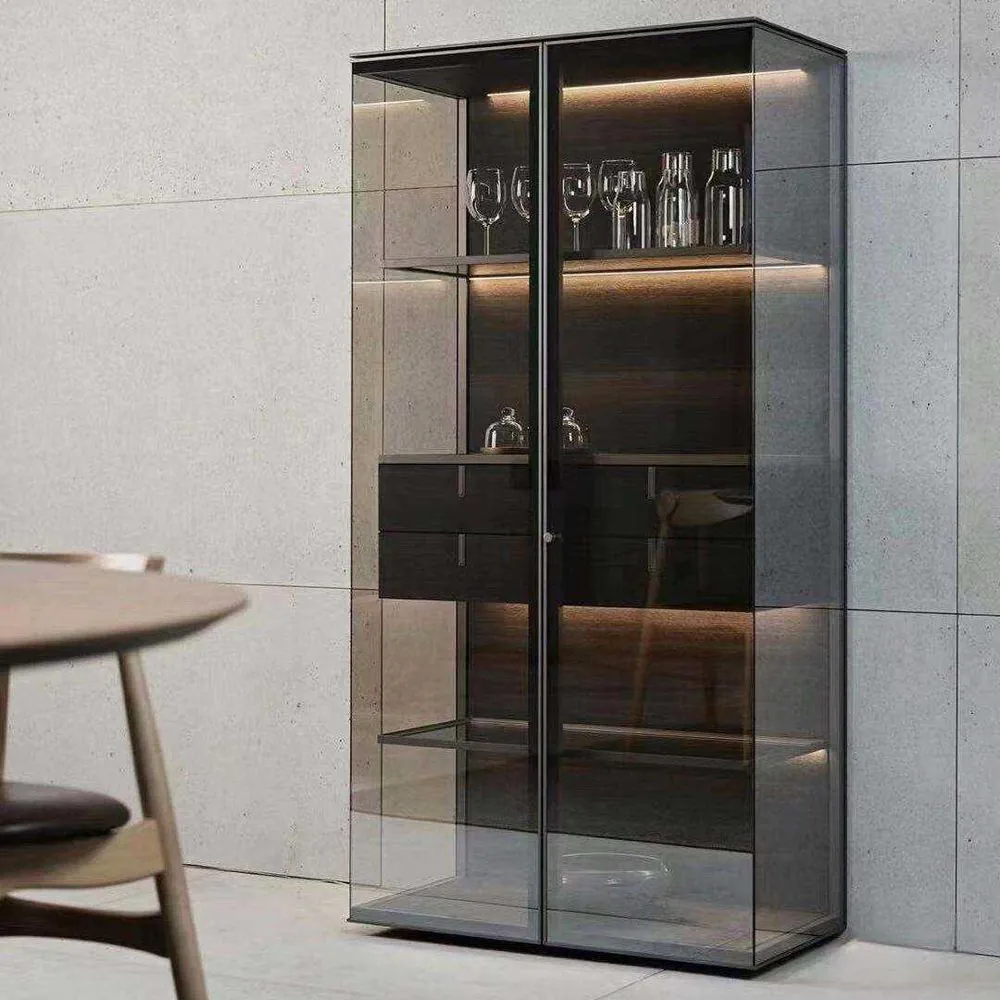
H3: Wine display cabinet — a wine display cabinet holds bottles at a serving temperature with the labels visible. It is a refrigerated cabinet with display lighting, not a lit cupboard; the glass, the insulation and the light source all have to be chosen together.
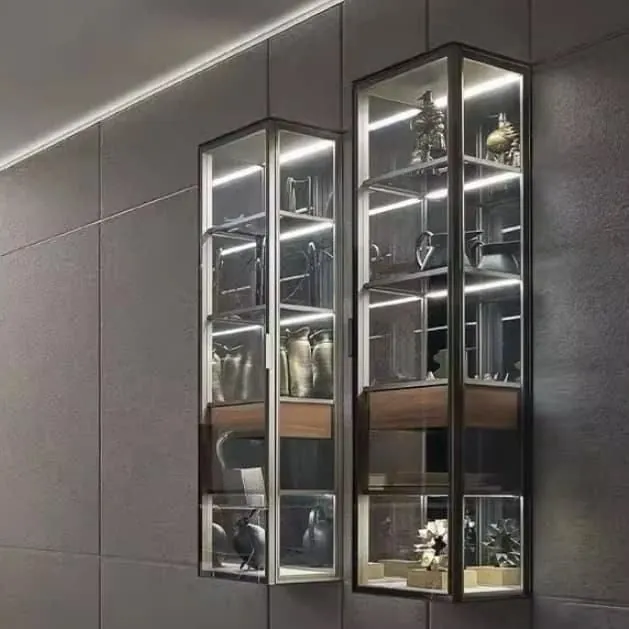
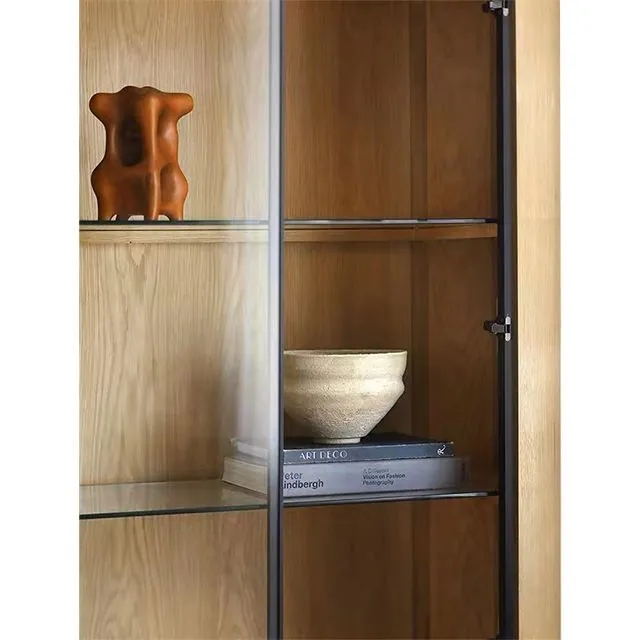
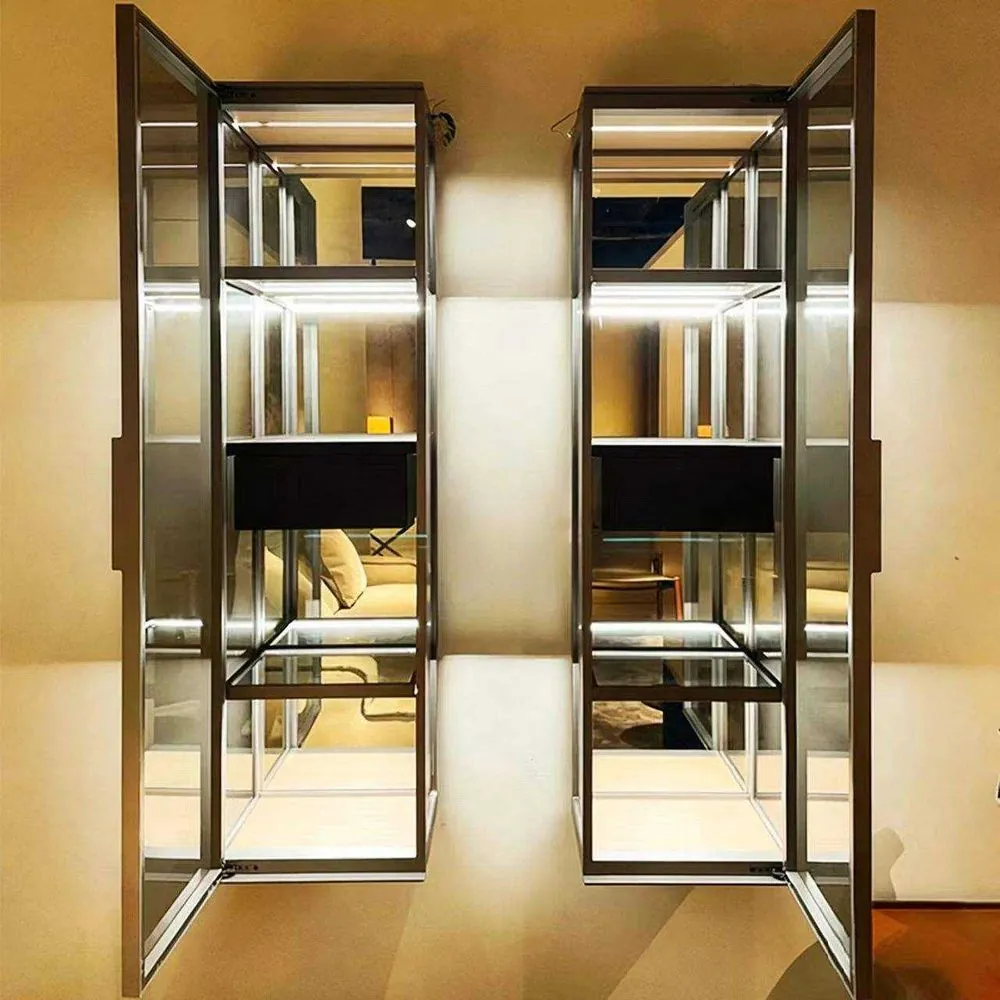
H3: Collectibles and figures — a modern wall-mounted glass-door display cabinet for figures/collectibles or a collectible figure display cabinet has to control UV and heat, because resin and paint fade. A dust-proof glass display cabinet for figures/models with LED lighting is the specification we build most often for private collectors: sealed gaskets, low-voltage LED outside the object zone, and shelving that can be re-pitched as the collection grows.
H3: Retail and showroom — a commercial display cabinet, a product display cabinet or a multi-level product sample display cabinet for corporate showrooms puts merchandising logic first: sight lines, reconfigurable shelves, lockable storage and a lighting scene that can be changed per campaign.
H3: Jewellery and high-value goods — a high-end solid wood display cabinet for premium jewelry and gold combines a secure structure with a lighting scheme that does not create glare on polished metal. Locking, glass lamination and alarm provision are specified with the cabinet, not added later.
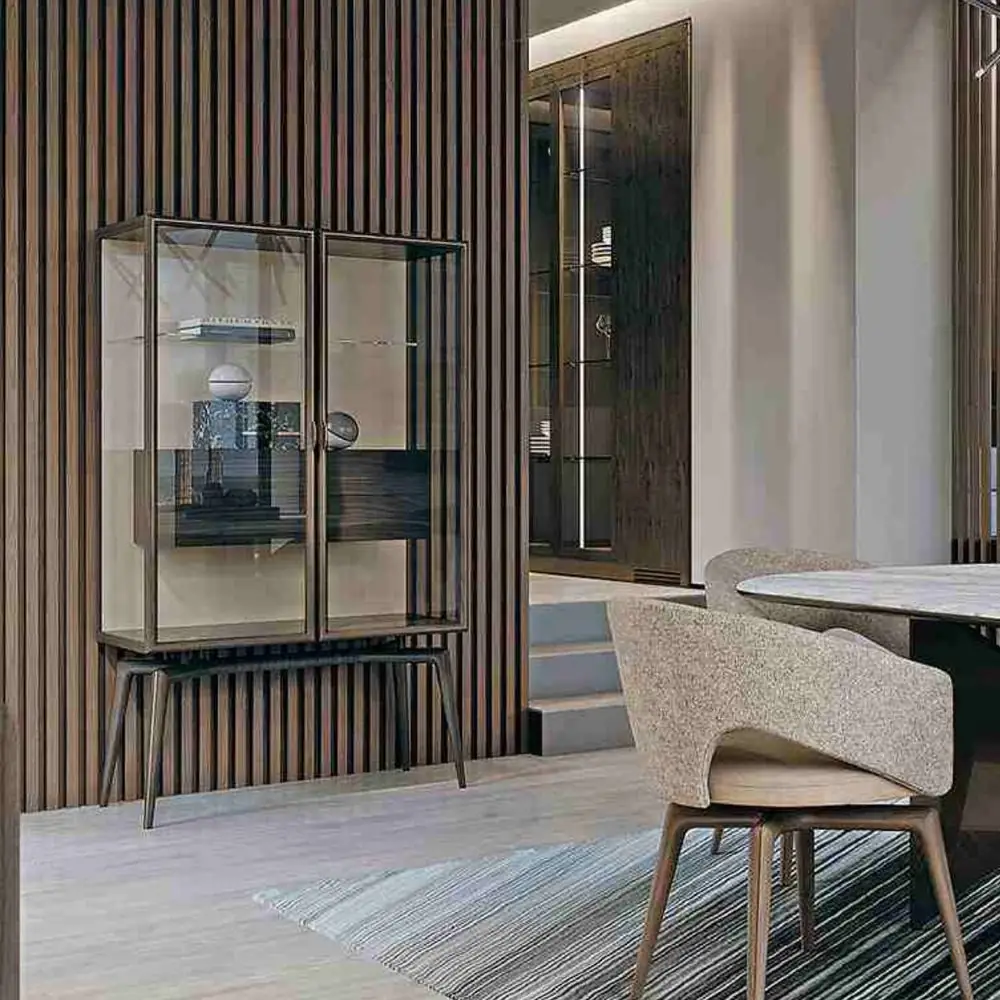
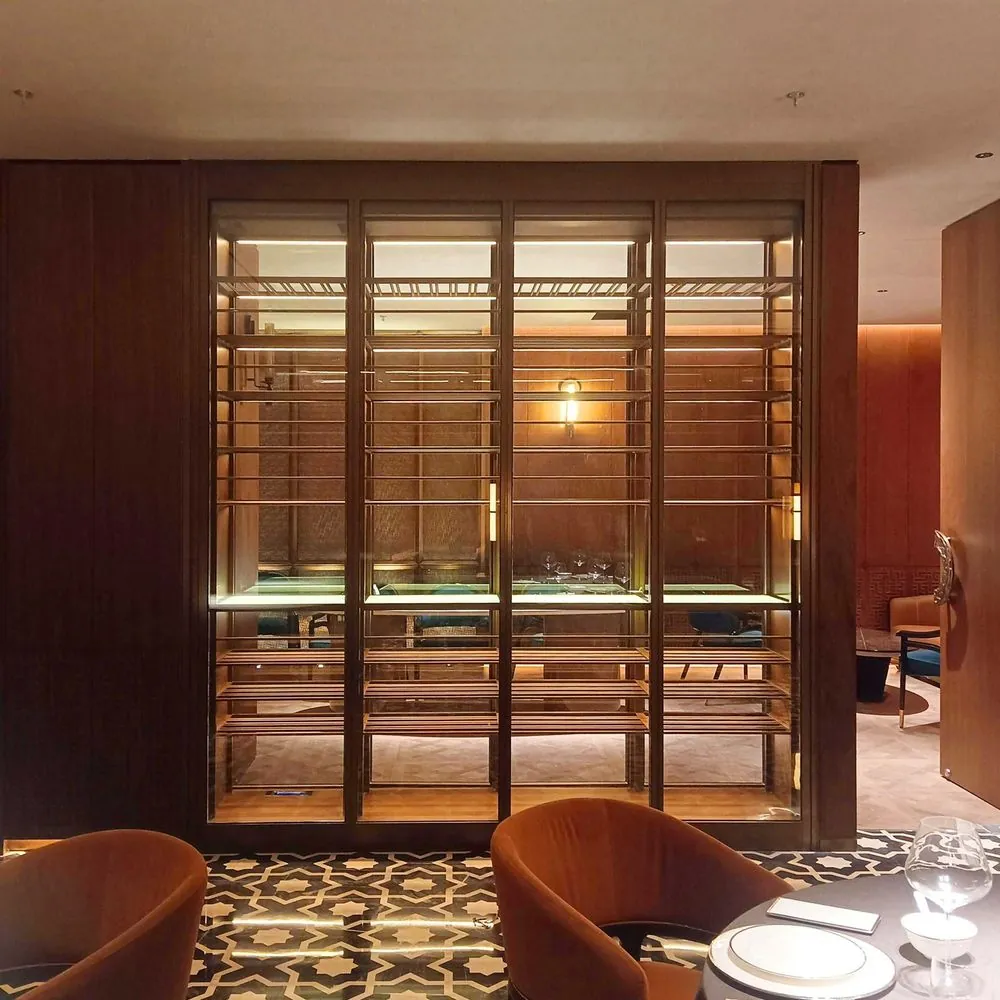
H3: Decorative and architectural — a decorative cabinet or metal decorative cabinet is part of the room's composition: a custom stainless steel decorative cabinet used as a partition, or a stainless steel and acrylic cabinet where the contents should appear to float.
Glass, seals and light
A glass display cabinet is defined by three details: the glass build-up (laminated where safety or UV matters), the gasket system (a cabinet that is not sealed will not stay dust-free), and the light path (LED at low voltage, driver serviceable, no heat in the object zone).
An LED display cabinet is not automatically a good display cabinet. LED can still bleach pigment if it is close and continuous; we specify CRI, colour temperature and duty cycle together, and we will say when a lighting scheme is likely to damage the contents.
Materials
A stainless steel display cabinet holds tolerances and survives cleaning; a solid wood display cabinet reads warmer but moves with humidity. An acrylic display cabinet is light and clear and scratches, which matters on a retail floor. A metal display cabinet without a named grade is an unknown quantity, which is why we specify the alloy rather than the look.
Premium and high-end, defined
Premium display cabinet, high-end display cabinet and high-end finishes describe a level, not a specification. In our drawings the level means: a formed frame with mitred or welded corners finished consistently, glass with a specified build-up, lighting with a serviceable driver, and hardware that can be replaced in five years.
Frequently asked questions
Will the lighting damage what is inside?
It can. UV and heat are the two mechanisms; we specify low-UV LED, keep the source out of the object zone, and will tell you when a requested scheme is too aggressive for the contents.
Can the cabinet be sealed against dust?
To a practical level, yes — with gaskets and a closed frame. A cabinet with open gaps and a sliding door will never be dust-free.
Can I change the shelf heights later?
Yes, if the system is designed for it. We use adjustable pitch on shelving for collections that grow or change format.
Do you build to a millimetre?
We build to a drawing and we ask for the finished opening, not the nominal one. Site tolerances are the most common cause of a cabinet that does not fit.
What is the lead time?
Approximately one month after drawing approval; glass and lighting procurement can extend that, confirmed at review.
Can you supply matching cabinets across multiple sites?
Yes, with a fixed finish standard and a per-unit inspection record so that the tenth cabinet matches the first.
Related collections and models
02 — MODELS
Custom Display Cabinets: 8 Engineered Models
Every model below is built to order. Dimensions, finish and refrigeration capacity are specified per project — nothing here is a stock item.
START A CONVERSATION
Specify a Custom Display Cabinets Project
Send drawings, a room schedule or a reference photograph. A named engineer reviews it and replies with a 3D concept and a costed BOM — usually within 48 hours.